
Dry mouth after medicines: what to tell your dentist
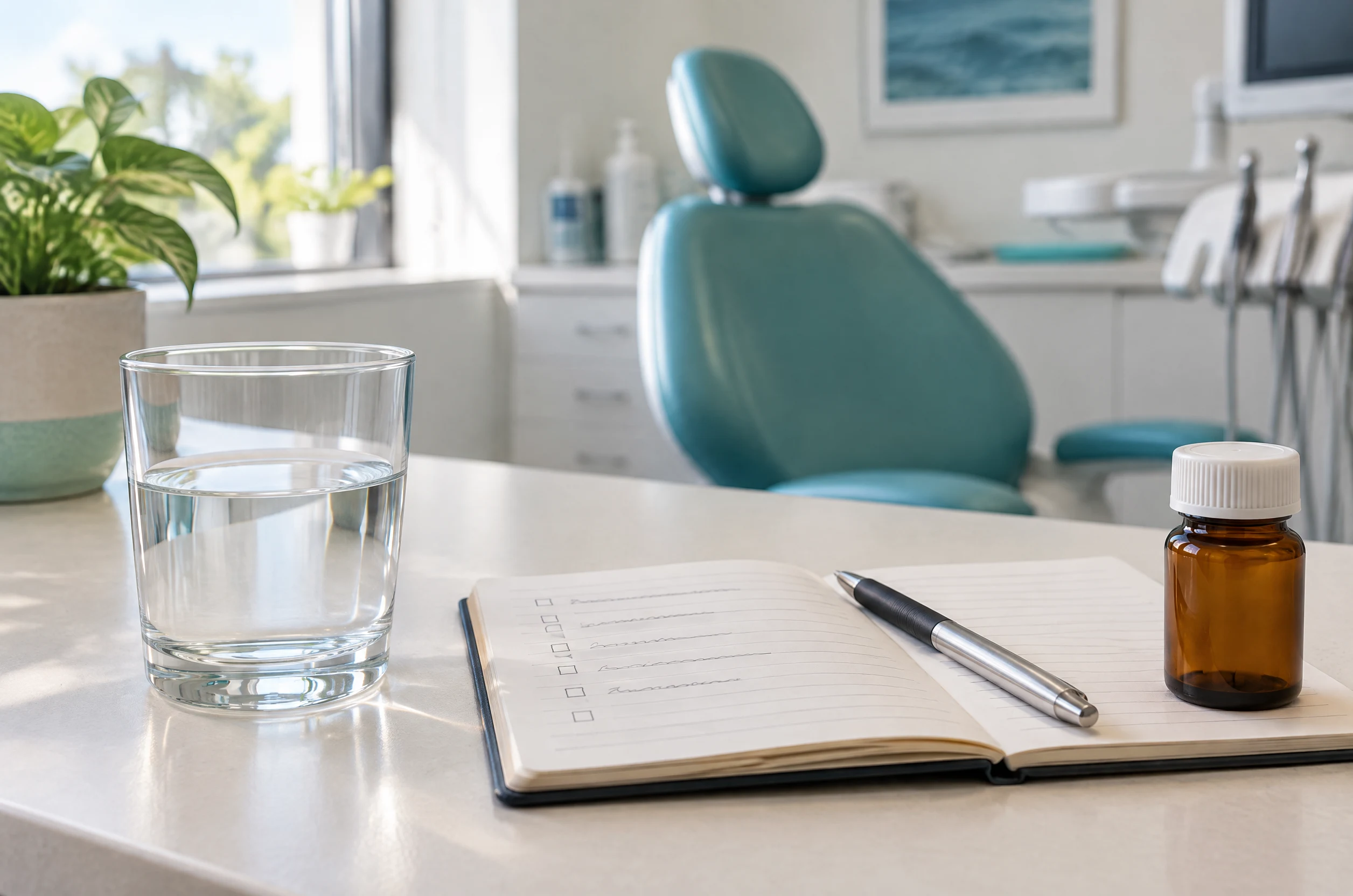
You keep reaching for water, and you're wondering whether a medicine is the reason. You don't need to work that out on your own, or arrive at the dentist with a diagnosis.
Medicines can contribute to dry mouth, but they're not the only possible cause. Tell your dentist what you take and what has changed; don't alter medicines yourself. Joondalup City Dental asks new patients to bring a current medication list and relevant health-history forms. Those are useful starting points for the conversation. [1] [3]
Could my medicine be causing the dryness?
Yes, a medicine can contribute to dry mouth. The Australian Dental Association lists medicines among the possible causes, alongside dehydration, smoking and some health conditions. It also explains that feeling dry does not always mean the saliva glands aren't working properly. A dry feeling is a symptom to describe, rather than proof of one particular cause. [1]
The Victorian Department of Health's Better Health Channel says prescription, over-the-counter and herbal medicines can affect teeth and gums. Its advice is to tell your dentist about the medicines you take and ask your doctor, pharmacist or dentist whether they could be contributing to dryness. Something bought without a prescription still belongs in that conversation. [2]
If you noticed the dryness after starting something new, say so. You might write, “I started this in September, and I first noticed the dry feeling a week later.” That is a way to organise your account, not a conclusion that the medicine caused it. Bring the details and ask the question; you don't have to decide which item on a long list is responsible.
What should I tell the dentist before the appointment?
Bring your current medication list, including non-prescription and herbal products, and mention anything you have recently taken. Better Health Channel specifically includes recent medicines in its dental-treatment advice. At Joondalup City Dental, bringing your medication list and relevant oral and general health-history forms is already part of the clinic's published first-visit preparation. [2] [3]
You can make that information easier to discuss by putting it in one place. Write the name from the label, how you currently take it, and the name of the doctor or other clinician you usually ask about it. If your list is out of date, tell the team rather than presenting it as complete. A phone note is a reasonable place to collect your own questions.
Describe the problem in your own words too. Is the dryness most noticeable when you eat, or is it the feeling at bedtime that bothers you? Have you noticed a taste change or another new mouth symptom? Better Health Channel advises speaking with a dentist, pharmacist or doctor about dry mouth, taste changes or new oral symptoms while taking medication. You can explain what is happening without knowing the clinical name for it. [2]
Don't leave out a concern because it sounds small or embarrassing. “I keep a drink beside me at meals” is a clearer description of your experience than trying to give it a severity score you aren't sure about. You could also write down what you have already tried so you don't have to remember it all while you're in the chair.
Should I stop the medicine or ask for a different one?
Don't change your medicine on your own. Ask the clinician responsible for it about any proposed change. The Australian Dental Association's dry-mouth guidance puts it plainly: Never make medicine changes all by yourself.
It says changes should only happen with your doctor's advice. [1]
Better Health Channel describes two possible conversations. If a medicine is contributing to dental problems, your dentist may suggest discussing a change in dose or the way you take it with your doctor. If changing it isn't possible, you can talk with your dentist about professional and home care to help protect your teeth. Neither path means you should stop treatment first and seek advice afterwards. [2]
| Your question | Who to ask and what to discuss |
|---|---|
| “Could something I take be contributing?” | Ask your doctor, pharmacist or dentist to review the medication information with you. [2] |
| “Can I change the dose or switch?” | Discuss changes with your doctor; do not make medicine changes yourself. [1] |
| “What if I need to keep taking it?” | Ask your dentist about professional and home care for your teeth while the medicine continues. [2] |
| “What does my mouth need now?” | Ask your dentist to assess your mouth and discuss an individual plan. [1] |
These are connected conversations, but they aren't interchangeable. You can take the same written medication list to both appointments and make a note of the advice you receive. If you're unsure what someone meant, ask them to explain it before you make a change.
Why does a dry mouth matter if my teeth feel fine?
Dry mouth can increase the risk of tooth decay. Better Health Channel explains that saliva helps neutralise mouth acids, repair acid-damaged enamel and wash food particles from tooth surfaces. The Australian Dental Association also notes that decay can develop faster in a dry mouth. The conversation therefore needs to cover your teeth as well as how the dryness feels. [2] [1]
The ADA recommends regular dental checks and says people with dry mouth may need to attend more often. Ask what interval is appropriate for you rather than assuming an extra visit is automatically needed. Joondalup's dental check-up information is a useful introduction to that service; your own assessment is where you can discuss the timing. [1]
For tooth care, Better Health Channel advises gentle, thorough brushing at least twice a day and flossing once a day. It also says a dentist may recommend fluoride care, including a higher-strength toothpaste or fluoride mouthwash. Ask what is appropriate for your mouth rather than choosing a stronger product simply because it appears on a dry-mouth shopping list. [2]
What can I do day to day while I arrange advice?
Water and food choices are part of the ADA's general dry-mouth advice. It suggests drinking water, sipping it with meals, and moistening dry foods with sauces. It also suggests avoiding sugary drinks and reducing tea and coffee. Those suggestions sit alongside seeing your doctor or dentist to look for the cause; they don't establish what is causing your particular symptoms. [1]
Think about the part of the day you want help with. If meals are difficult because food feels dry, ask about the ADA's suggestions for moister foods. If you're reaching for sweet drinks repeatedly, ask about alternatives. Better Health Channel recommends fluoridated tap water rather than acidic fizzy soft drinks and advises cutting back on sweet or sticky foods. [1] [2]
The ADA also advises avoiding smoking and alcohol because they can worsen dryness. If either is relevant, mention it during the conversation. You aren't expected to turn up with a perfect routine. An honest description of your day gives you and the clinician something practical to talk through. [1]
Would chewing gum, a gel or a mouthwash help?
There are several options to discuss, but no single product is selected for you by this article. The ADA describes sugar-free chewing gum as a way to encourage saliva flow, while warning that it may not be a good idea for someone with jaw problems or jaw pain. It also describes saliva-replacement products such as gels, sprays and mouthwashes. [1]
Tell your dentist or pharmacist what you're already using and ask whether it fits your needs. Keep comfort and tooth care as separate questions: “What might help the dry feeling?” and “What should I use to care for my teeth?” The ADA discusses both saliva-replacement products and decay prevention; Better Health Channel says your dentist may recommend fluoride care. A product conversation should leave room for both. [1] [2]
There is no need to arrive at Joondalup with a bag of newly purchased products. You can start with your list, your questions and a description of what you already use. This article does not recommend a brand or say that buying a dry-mouth product replaces an assessment.
What happens at a first visit to Joondalup City Dental?
The clinic's new-patient information says the dentist conducts an examination and may take X-rays or scans. It asks you to bring your health fund card, current medication list and relevant health-history forms. It also describes an assessment of teeth and gums followed by a discussion of your needs and a personalised treatment plan. [3]
“May” matters here. The clinic's page doesn't say every person with dryness receives the same tests, and this article doesn't add a standard dry-mouth test package. Tell the team the reason for your visit so you can discuss your concerns in the assessment. You can find the clinic's other general-care information in its general dentistry section.
Before you finish the conversation, you could ask: “What do I need to discuss with my doctor, and what is the plan for my teeth?” Write down any questions you still have. If the medication list has changed since you completed your forms, point that out rather than hoping the change is unimportant.
Your appointment checklist
Use this as a short preparation note, not a checklist for diagnosing yourself.
- Collect your current medication list and note anything recently taken, including over-the-counter and herbal products. [2]
- Write when you first noticed the dryness, what it feels like, and the questions you want answered.
- List any mouth products you already use so you can discuss them without relying on memory.
- Bring the health fund card and relevant health-history forms requested by Joondalup City Dental. [3]
- Ask who to contact about medicine changes and what dental care is appropriate; don't change medicines yourself. [1]
Joondalup City Dental is at Sanori House, 1/126 Grand Boulevard, Joondalup WA 6027. You can contact the clinic or call (08) 9404 9500. A simple opening is: “My mouth has been feeling dry, and I take regular medicines. I'd like an appointment to discuss it. What should I bring?” [4]
Sources and scope
This is general published guidance, not personal medical or dental advice. Sources checked 2 November 2026. The article is attributed to Tony Strangio; no separate clinical review is claimed.
- Australian Dental Association: Dry mouth. Publication or review date not stated on the retrieved page. The short quotation above is from “Treatments to discuss with your dentist, doctor or dental specialist”.
- Victorian Department of Health, Better Health Channel: Teeth and medication. Reviewed 29 October 2025.
- Joondalup City Dental: New-patient expectations. Clinic preparation and assessment information.
- Joondalup City Dental: Contact us. Clinic address and reception number.
- Joondalup City Dental: Tony Strangio profile. Author identity.


 Unhappy With My Smile
 I Have Missing Teeth
 Unhappy With My Dentures
 My Teeth Are Stained or Discoloured
 Considering Teeth Straightening
 Want a Full Smile Makeover
 I Have a Dental Emergency
 Seeking Smile Improvement
 Help With Dental Anxiety
 General Dentistry
 Cosmetic Dentistry
 Restorative Dentistry
 Dental Implants
 Orthodontics
 Emergency Dentist
 Sedation and Sleep Dentistry
 Health Funds
 HBF
 Medibank
 HIF
 HCF
 AHM
 Bupa
 CBHS
 Nib Preferred Provider
 Payment Plans
 Afterpay
 Humm
 Pretty Penny Finance
 Medipay
 Fund My Dental
 Government Schemes
 Dental Services DVA Card Holders
 Child Dental Benefit