
Downsides of LED teeth whitening kits vs dentist-supervised whitening in Joondalup
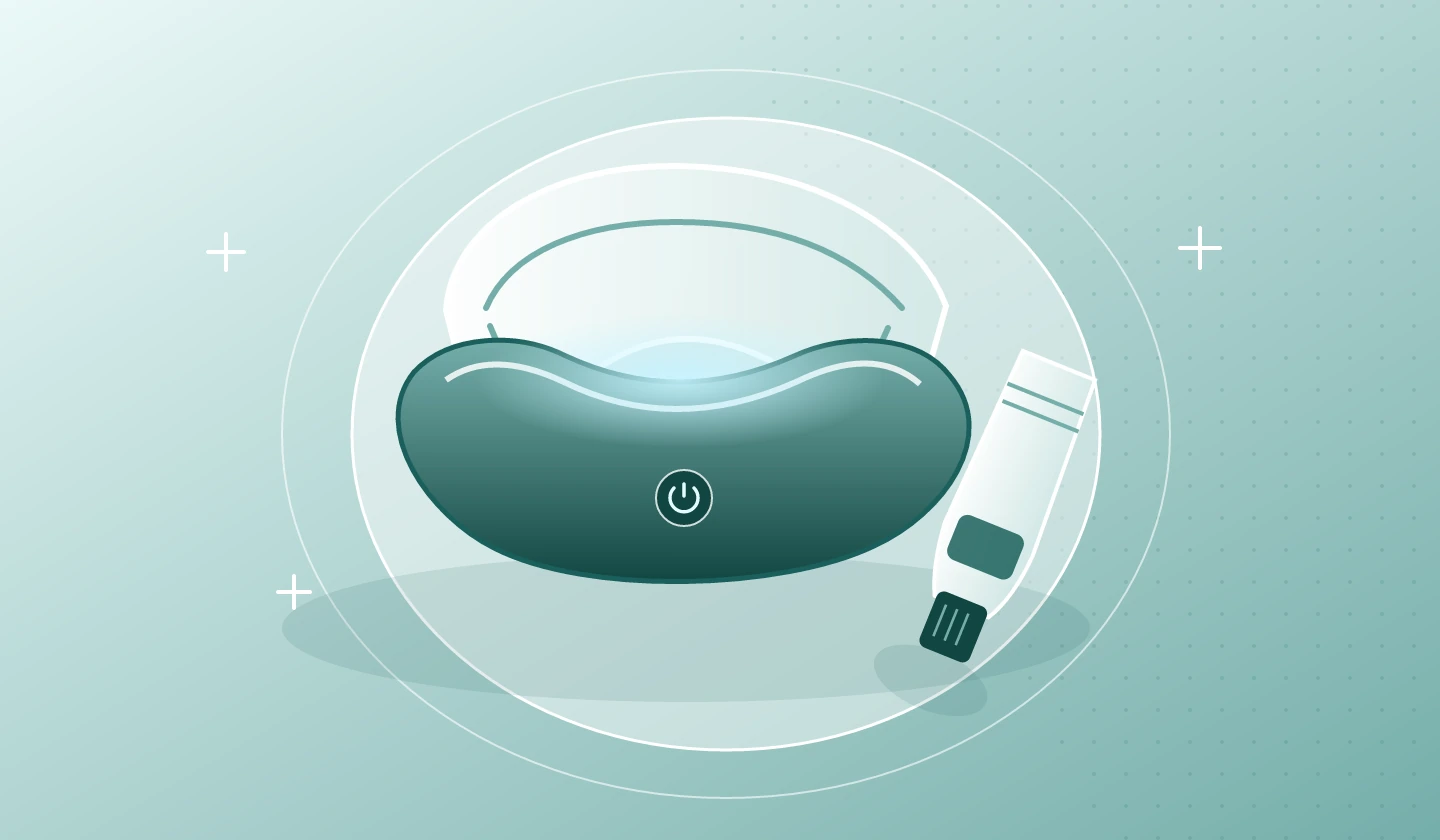
Shop-bought LED teeth whitening kits can cause sensitive teeth and sore gums, and the light tells you little about what the kit will do for your teeth. When a kit contains peroxide, the gel is the bleaching agent. The LED may be part of the product, but it does not tell you what is causing the discolouration or whether bleaching is suitable.
At Joondalup City Dental, our teeth whitening service includes in-chair whitening and dentist-supervised take-home whitening. The difference to consider is who checks your mouth first, who chooses and applies the product, and who you can contact if your teeth or gums react. [1] [2] [6]
What does the LED add to a whitening kit?
In peroxide bleaching, hydrogen peroxide or carbamide peroxide is used to lighten natural tooth colour. Some in-chair systems also place a light over the teeth while the gel is applied. Dentist-supervised take-home trays can deliver gel without an LED mouthpiece. The presence of a light does not tell you which ingredient is in the gel or its concentration. [1] [2]
If you are comparing blue LED, UV or laser advertising, check which device and gel the claim refers to. A claim about one in-chair system gives you no basis for expecting the same result from a different light and gel sold online. Ask what the product is intended to change and whether the kind of stain you have is likely to respond. [1] [2]
Four downsides to weigh before buying a kit
1. Sensitivity can interrupt treatment
Teeth can become sensitive to cold during or after whitening. If cold drinks already bother you, tell your dentist which teeth react and how long the feeling lasts. Mention any pain before you start so the dentist can consider whether the tooth needs assessment first. [1] [2]
2. Gel can irritate gums and other soft tissues
Check how the tray sits and where the gel is meant to go. If gel escapes onto the gums, lips or tongue, it can irritate them. Strong bleaching gels can also cause chemical burns. If you are unsure how much gel to use, ask a dentist before applying it. Extra gel or a longer session can increase exposure without addressing why you are unhappy with the colour. [1] [2]
3. Whitening can make an existing shade difference more visible
Bleaching does not lighten crowns, veneers or tooth-coloured fillings. If you have one on a front tooth, the natural teeth around it may change shade while the dental work keeps its original colour. Ask a dentist to show you which surfaces are natural tooth and which are restorative material. If you are already planning a new restoration, discuss the order of treatment and shade selection before starting. [1] [2]
4. A kit cannot identify what changed the colour
Tea, coffee and smoking can stain the outer surface. Colour can also come from inside a tooth, including changes after an injury. If one tooth has darkened or the colour has recently changed, tell your dentist which tooth it is and when you first noticed it. Ask whether an examination or professional clean makes sense before considering bleaching. [2] [3]
How to read the peroxide percentage in Australia
Australia's Poisons Standard restricts tooth-whitening preparations above 6% hydrogen peroxide or above 18% carbamide peroxide. The Schedule 10 entries make an exception for preparations manufactured for and supplied solely by registered dental practitioners as part of their practice. These concentrations refer to the gel, regardless of whether the package comes with a light. [4] [5]
When reading the label, match the percentage to the named ingredient. A percentage of carbamide peroxide must be compared with the carbamide peroxide threshold. The fact that a website ships to Joondalup does not establish that a product meets Australian retail restrictions. If a listing omits the active ingredient or concentration, ask for the full label and show it to a dentist before using it. [4] [5] [7]
A retail threshold is a supply rule. Suitability still depends on your teeth and gums. The Dental Board explains that a registered practitioner can assess a suitable patient and supply whitening products for home use. That process includes an examination, your dental history and instructions for managing risk. [4]
Shop-bought, supervised take-home or in-chair?
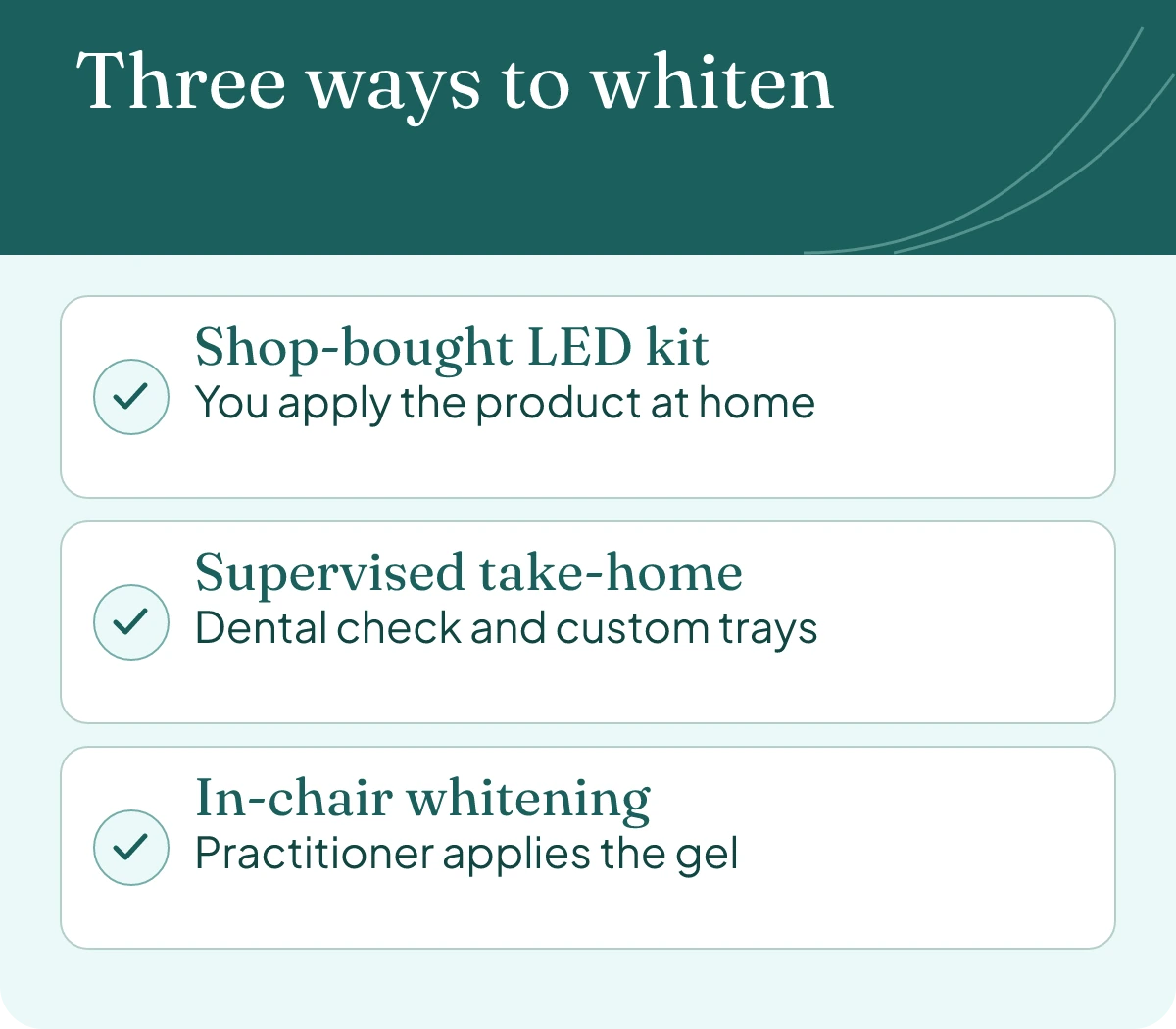
- Shop-bought LED kit. You apply the product at home using the supplied instructions and tray. Check whether the ingredient and strength are clear and ask a dentist whether the kit suits your mouth, particularly if you have pain, irritation or visible dental work.
- Dentist-supervised take-home whitening. A dentist checks suitability and can supply custom trays and gel. Ask them to explain how much gel to use, how long to wear the trays, how many days to use them and who to contact if the tray rubs or your teeth become sensitive.
- In-chair whitening. The dental practitioner applies the product in the clinic. Ask how they protect your gums, what you should tell them during the appointment and what to do if you have symptoms afterwards. Ask for a cost estimate before making a decision.
In-chair and supervised take-home whitening involve different schedules. If your reason for considering a kit is convenience, discuss whether following a tray schedule at home fits your routine. If you're comparing costs, ask what each option includes, including trays and follow-up advice. [1] [2] [6]
Find out what a review would change
If you already own a kit, take the packet and tray to a dental visit before buying refills. A useful question is whether the concern is a surface stain, the natural shade of a tooth, or the colour of a restoration. The answer can change what you decide to do. A clean may be worth discussing for surface stains, and a front crown may mean you want to keep the shade you have. [1] [2]
If you have used a whitening product before, explain which one it was, how often you used it and how your teeth and gums felt. Ask how your previous reaction affects the choice between treatment at the clinic, a supervised tray plan or leaving the colour alone. If you choose treatment, ask what you should check before applying any more gel. [1] [4]
Ask your dentist what the comparison means for the teeth you can see when you talk or smile. Point out the exact tooth or area you want them to look at. That gives you a way to discuss your expectations, the limits of whitening and whether any further treatment would be appropriate. [1] [4]
What to bring up before whitening
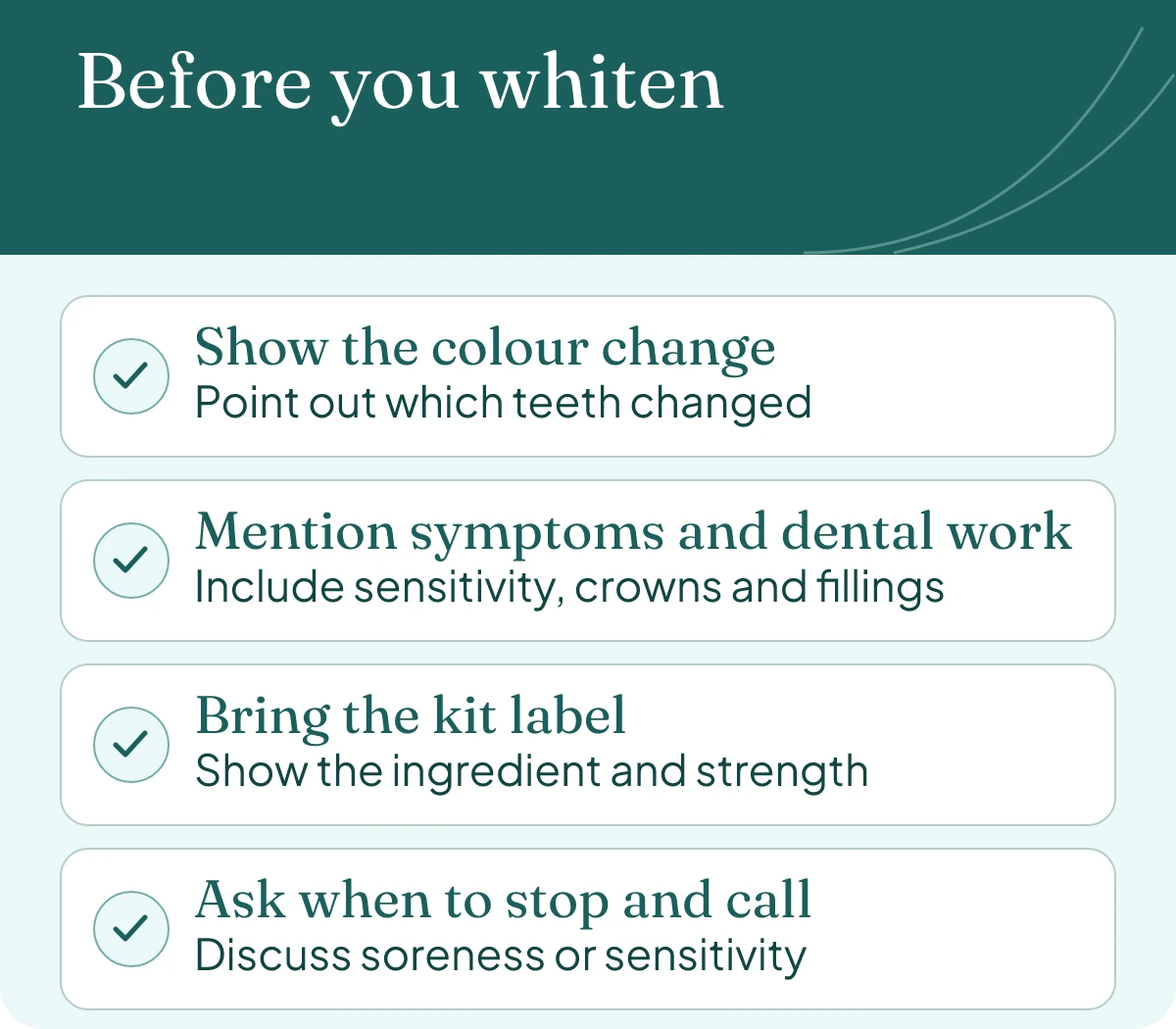
- Show where the colour changed. Point out a single dark tooth, a band of colour, or staining across several teeth. Tell your dentist when it changed and whether an injury or dental treatment came before it.
- Mention symptoms and dental work. Tell them about sensitivity, pain, sore gums, cracks you know about, crowns, veneers and fillings. Ask if any problems need attention first.
- Bring the product details. Show a photo of the ingredient list, the peroxide percentage and the directions. If you have a tray, bring it so you can show how it sits.
- Agree on when to stop and call. If a dentist recommends whitening, ask what to do if the gel irritates your gums or a tooth becomes painful. Ask who to contact if symptoms continue after you stop.
Healthdirect advises a dental check if sensitivity or irritation continues for more than a day or two after whitening. Tell the practice what you used, when you used it and where you feel the symptoms. [2] [4]
When cleaning or leaving the colour alone makes sense
Whitening toothpaste mainly works on stains on the outside of a tooth and can still cause sensitivity. A dental clean is another option to discuss when the concern is surface staining. Home mixtures made with acidic fruit or charcoal can damage teeth with repeated use. If you are concerned about your enamel, ask a dentist to check it before you try another product. [1] [2] [3]
There is no need to bleach teeth simply because they are a natural shade you see in the mirror. If surface staining returns, continue brushing with fluoride toothpaste and cleaning between teeth. You can rinse with water after foods or drinks that stain. Ask what caused the change before deciding whether to repeat whitening. [1] [2]
Teeth can also look yellower as enamel wears and more of the dentine underneath shows through. That is a different reason for a change in colour from a stain left by coffee or tea. If your teeth look darker even after a clean, ask your dentist whether natural tooth colour, enamel wear or something inside the tooth explains what you see. [2]
Sources and scope
This article provides general dental information. Ask your dentist for advice about your own teeth, gums and dental work. Sources checked 28 November 2026.
- Australian Dental Association: Teeth whitening
- Healthdirect Australia: Teeth whitening
- Better Health Channel: Cosmetic dentistry and teeth whitening
- Dental Board of Australia: Using and supplying teeth whitening products
- Federal Register of Legislation: Poisons Standard, Schedule 10
- Joondalup City Dental: Teeth whitening
- Australian Dental Association: Teeth whitening policy
Frequently asked questions
Can an LED mouthpiece whiten teeth by itself?
Peroxide gel is the bleaching agent in a peroxide-based kit. The light on the mouthpiece does not tell you what the gel contains, how much your teeth might change shade or whether whitening is suitable for you.
Can I buy a kit with more than 6% hydrogen peroxide in Australia?
The Poisons Standard restricts whitening preparations above 6% hydrogen peroxide or above 18% carbamide peroxide. The exception is for preparations made for and supplied solely by registered dental practitioners as part of their practice.
Can I whiten teeth if I have a front crown or filling?
Ask your dentist to check the tooth and the restoration first. Whitening can change the shade of natural teeth while a crown, veneer or tooth-coloured filling keeps its original colour.
What if my teeth or gums hurt after using a whitening kit?
Pause the whitening and ask your dentist for advice before restarting. Healthdirect advises a dental check if sensitivity or irritation continues for more than a day or two. Take the product details with you.
What if only one tooth has gone darker?
Arrange a dental assessment and mention any past injury or treatment to that tooth. Knowing why the colour changed helps your dentist discuss whether whitening or another approach is suitable.
Can I whiten my teeth while pregnant or breastfeeding?
The Australian Dental Association advises avoiding whitening treatment during pregnancy or breastfeeding because the safety evidence is limited. Ask your dentist or doctor before using a whitening toothpaste during that time.
Is a dentist's take-home kit the same as a shop-bought LED kit?
A dentist-supervised kit follows a dental assessment. It can include custom trays and individual instructions for applying gel, wearing the trays and managing sensitivity. You still apply the gel at home.


 Unhappy With My Smile
 I Have Missing Teeth
 Unhappy With My Dentures
 My Teeth Are Stained or Discoloured
 Considering Teeth Straightening
 Want a Full Smile Makeover
 I Have a Dental Emergency
 Seeking Smile Improvement
 Help With Dental Anxiety
 General Dentistry
 Cosmetic Dentistry
 Restorative Dentistry
 Dental Implants
 Orthodontics
 Emergency Dentist
 Sedation and Sleep Dentistry
 Health Funds
 HBF
 Medibank
 HIF
 HCF
 AHM
 Bupa
 CBHS
 Nib Preferred Provider
 Payment Plans
 Afterpay
 Humm
 Pretty Penny Finance
 Medipay
 Fund My Dental
 Government Schemes
 Dental Services DVA Card Holders
 Child Dental Benefit